

If you’re in the United States and need money for a big expense or debt, a personal loan can be a smart option—if you understand how it works and choose the right lender. Unlike credit cards, personal loans give you a fixed amount with a fixed monthly payment and a clear payoff date. This guide will explain everything you need to know before applying, compare major USA lenders, and show you how to avoid overpaying in interest and fees.
What Is a Personal Loan?
A personal loan is a type of unsecured loan that you borrow from a bank, credit union, or online lender and repay in fixed monthly installments over a set period (usually 2 to 7 years). You can use it for almost any purpose, such as:
- Paying off high‑interest credit card debt
- Home repairs or renovations
- Medical bills
- Moving or travel expenses
- Wedding or big events
Because personal loans are usually unsecured, lenders cannot take your home or car as collateral, but they may consider your credit score, income, and debt‑to‑income ratio when deciding your interest rate and approval.
Types of Personal Loans in the USA
Not all personal loans are the same. Here are the main types you’ll see in the US market:
- Unsecured Personal Loans
- No collateral required.
- Higher interest rates than secured loans.
- Best for people with good or excellent credit.
- Secured Personal Loans
- Require collateral (like a car, savings account, or home equity).
- Lower interest rates but higher risk if you can’t repay.
- Debt‑Consolidation Personal Loans
- Specifically designed to combine multiple debts into one loan.
- Often promoted by banks and credit unions as a way to “simplify” your payments.
- Fixed‑Rate vs. Variable‑Rate Loans
- Fixed‑rate: Monthly payment never changes.
- Variable‑rate: Payment can go up or down with market rates.
For most beginners, a fixed‑rate unsecured personal loan from a reputable US lender is the safest option.
How Do Personal Loans Work in the USA?
When you apply for a personal loan in the US, here’s what typically happens:
- You submit an application
- Online, in‑branch, or via a mobile app.
- You’ll share personal details, income, employment, and sometimes a loan purpose.
- Lender checks your credit and income
- Most lenders look at your FICO score (often 600+ minimum).
- They may also verify your income through pay stubs, tax returns, or bank statements.
- You get pre‑approved terms
- Amount (usually $1,000 to $100,000, depending on lender).
- Annual percentage rate (APR), which includes interest plus fees.
- Loan term (e.g., 24, 36, 60, or 84 months).
- If you accept, you sign the agreement
- Money is usually deposited into your bank account within 1–7 business days.
- You start making monthly payments on the due date.
Interest rates on personal loans in the USA commonly range from 6% to 36% APR, depending on your credit profile and lender.
Best USA Personal Loan Lenders (2026 Overview)
Here are some well‑known personal loan lenders in the United States that are active in 2026:
| Lender | Typical APR Range | Loan Amount Range | Notes |
|---|---|---|---|
| LightStream | 8.99% – 25.99% | $5,000 – $100,000 | Strong online bank, often lower rates for good credit. |
| Discover Personal Loans | 7.99% – 24.99% | $2,500 – $40,000 | No‑fee loans, fixed rates, US‑only. |
| SoFi | 8.99% – 29.99% | $5,000 – $100,000 | Popular for debt consolidation, membership perks. |
| Marcus by Goldman Sachs | 8.75% – 29.99% | $3,500 – $40,000 | No origination fees, easy online application. |
| Upstart | 9.19% – 35.99% | $1,000 – $50,000 | Uses AI and non‑traditional data, good for newer borrowers. |
When choosing a lender, compare APR, fees (origination, late, prepayment), and customer reviews carefully. A slightly lower APR can save you hundreds of dollars over the life of the loan.
How to Qualify for a Personal Loan in the USA
To increase your chances of approval, focus on these key factors:
- Credit Score
- Fair: 580–669
- Good: 670–739
- Very Good: 740–799
- Excellent: 800+
- Many lenders prefer 670 or higher for the best rates.
- Debt‑to‑Income Ratio (DTI)
- Aim for under 36% (total monthly debt ÷ gross monthly income).
- Lower DTI = better approval chances.
- Stable Income
- Regular job, self‑employment income, or retirement income that can be verified.
- Clean Payment History
- On‑time bills and low credit‑card utilization help your score.
If your credit is weak, consider applying with a creditworthy co‑signer or improving your score first by paying down balances and disputing errors on your credit report.
Why Was My Personal Loan Rejected? 8 Common
How to Compare Personal Loans (Key Tips)
Before signing anything, ask yourself:
- What is the APR, not just the interest rate?
- APR includes interest plus fees, so it’s the real cost of the loan.
- Are there origination fees?
- Some lenders charge 1–8% of the loan amount as a one‑time fee.
- What is the monthly payment?
- Use an online loan calculator to see how much you’ll pay each month and in total.
- Is there a prepayment penalty?
- What is the customer‑service reputation?
How to Apply for a Personal Loan Online (Step‑by‑Step)
Here’s a simple process you can follow in the US:
- Check your credit score
- Decide how much you need
- Borrow only what you truly need to avoid extra interest.
- Pre‑qualify with multiple lenders
- Many lenders offer soft‑credit checks that don’t hurt your score.
- Compare offers side by side
- APR, loan term, monthly payment, and total cost.
- Submit a formal application
- Provide ID, proof of income, and bank details.
- Accept the best offer and sign the agreement
- Money is typically deposited to your US bank account within a few days.
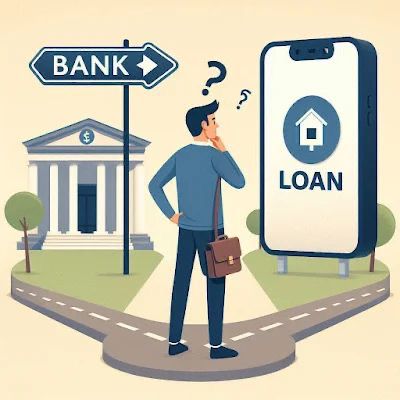
Pros and Cons of Personal Loans
Pros:
- Fixed monthly payments make budgeting easier.
- Can help pay off high‑interest credit cards (lower APR).
- Fast access to cash for emergencies or big purchases.
- Can improve your credit score if you pay on time.
Cons:
- Interest and fees can be high if you have poor credit.
- Late payments can damage your credit and trigger extra charges.
- You must qualify—you’re not guaranteed approval.
- Some people borrow more than they can afford, deepening debt.
Common Personal Loan Mistakes to Avoid
- Borrowing more than you need
- Only take what you can realistically pay back.
- Ignoring the total cost
- Focus on APR and total repayment amount, not just the monthly payment.
- Choosing a lender only because of fast approval
- Fast doesn’t always mean cheap or fair.
- Missing payments
- Late payments hurt your credit, increase your APR (on some loans), and can trigger fees.
If you’re struggling to pay, contact your lender early—many US lenders offer payment deferral or hardship programs.
How to Use a Personal Loan Smartly (Best Practices)
- Use it for high‑interest debt
- Avoid using it for everyday spending
- Treat it as a short‑term solution, not free money.
- Set up automatic payments
- This reduces the risk of late fees and credit‑score damage.
- Build an emergency fund after the loan
- So you don’t need to borrow again for small surprises.
- Check your credit regularly
- Once or twice a year to catch errors and track progress.
Is a Personal Loan Right for You in 2026?
A personal loan can be a useful financial tool if:
- You have a clear goal (debt payoff, medical bill, home repair).
- You can afford the monthly payment without stress.
- You’re not adding more debt than you already have.
If you’re unsure, consider talking to a non‑profit credit counselor or a financial advisor before applying. They can help you compare loans, credit‑card options, and budgeting strategies.
Apply here: Check your personal loan eligibility and apply online
If you’re looking for a personal loan in the USA with good interest rates, start by checking your credit score, comparing APRs from top lenders, and reading customer reviews. Always read the fine print before signing, and remember that consistency in payments is what turns a personal loan from a burden into a powerful tool for building your financial future. Whether you’re consolidating debt, paying for medical expenses, or covering unexpected costs, the right personal loan can give you flexibility—without the long‑term stress of too much debt.