
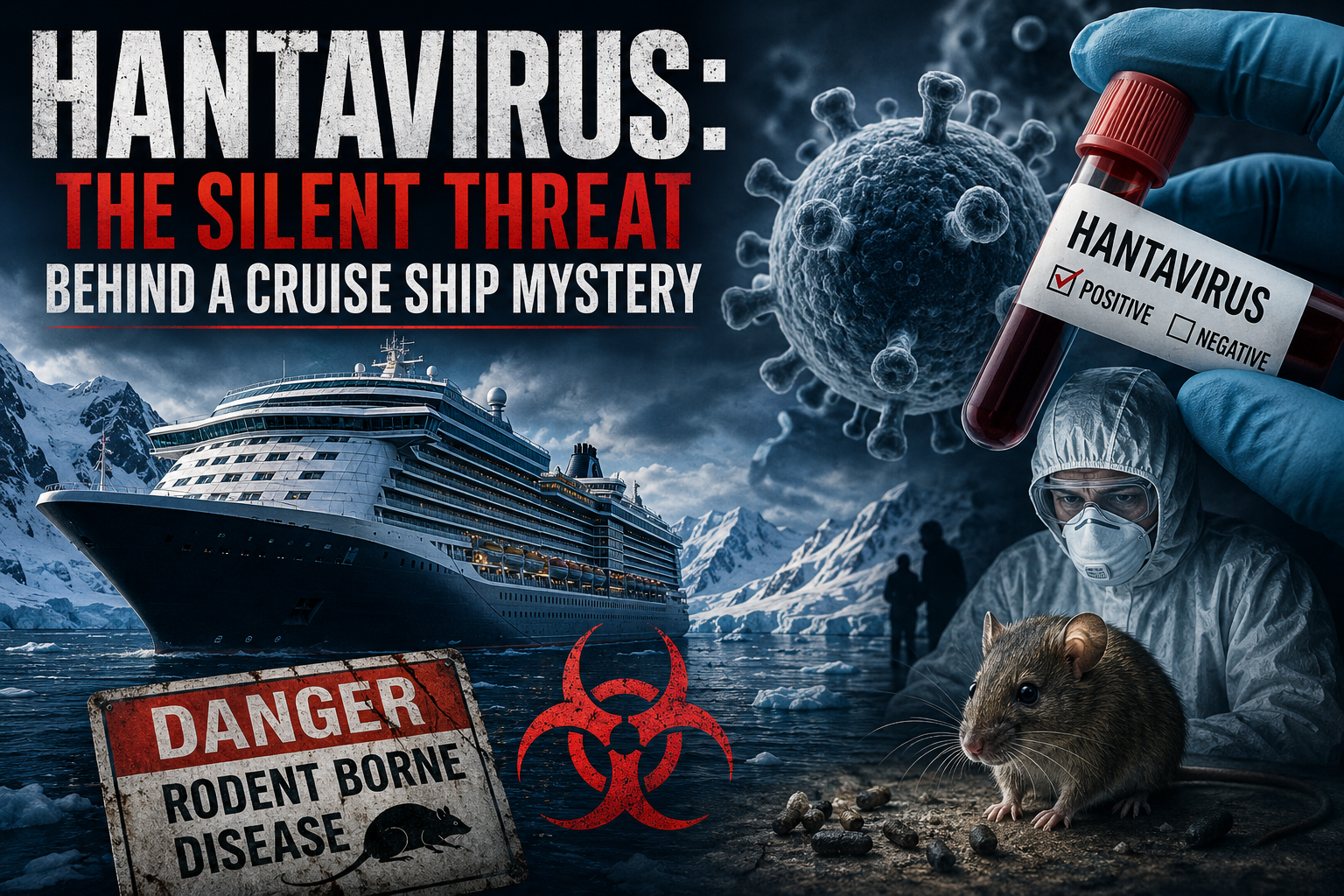
Hantavirus disease What begins as a dream journey to Antarctica—vast icy landscapes, luxury cruising, and untouched nature—can quickly turn into a nightmare when an invisible danger enters the scene. Imagine passengers enjoying their voyage when suddenly, one by one, they fall sick. Fever, fatigue, breathing difficulties… and in some cases, death.
The suspected cause? A rare and dangerous virus known as Hantavirus—a disease with no specific cure, no approved vaccine for widespread use, and a haunting history connected to rodents, war zones, and sudden outbreaks across the world.
This is not just a story of a cruise gone wrong. It is a reminder of how fragile human health can be when faced with emerging infectious diseases.
What is Hantavirus?
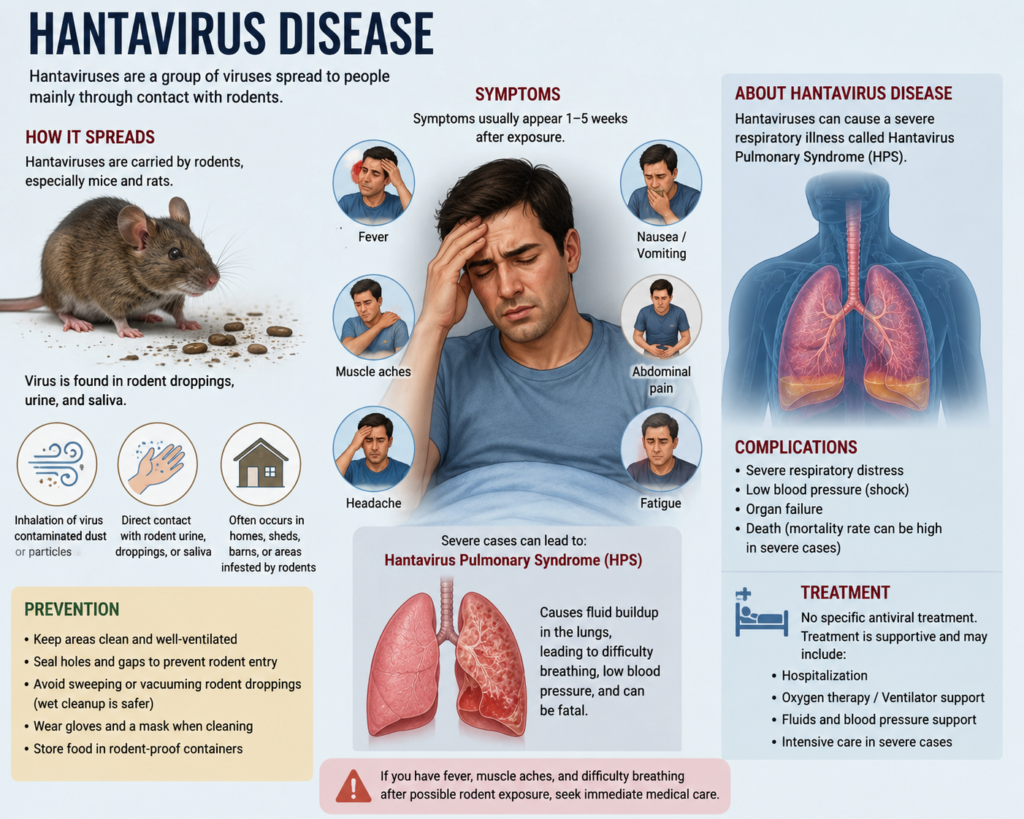
Hantavirus refers to a group of viruses primarily carried by rodents such as rats, mice, and voles. Humans typically become infected when they inhale particles contaminated with rodent urine, droppings, or saliva.
Unlike many common viral infections, Hantavirus does not spread easily from person to person in most cases. Instead, it spreads through environmental exposure—often in places where rodent infestations go unnoticed.
There are two major forms of illness caused by this virus:
- Hantavirus Pulmonary Syndrome (HPS) – mostly seen in the Americas
- Hemorrhagic Fever with Renal Syndrome (HFRS) – more common in Europe and Asia
Both forms are serious and can become life-threatening if not treated early.
Why the Cruise Ship Scenario Feels So Scary
A cruise ship represents a closed environment: thousands of people, shared ventilation systems, food supplies, and limited medical facilities. If a dangerous pathogen enters such a setting, it can create panic quickly.
In the imagined Antarctica cruise scenario, the fear escalates because:
- The ship is isolated in the ocean
- Medical evacuation is difficult
- Symptoms may appear suddenly and worsen fast
- People assume a “mystery virus” spreading onboard
While real cruise outbreaks are more commonly linked to viruses like norovirus or influenza, the idea of Hantavirus adds a deeper layer of fear because of its high fatality rate in severe cases
Hantavirus disease remains one of the most dangerous rodent-borne illnesses worldwide. Early detection of hantavirus disease symptoms can save lives. Prevention through proper sanitation and rodent control is the best defense against hantavirus disease.
How Do People Actually Get Infected?
The most common transmission route is surprisingly simple but dangerous:
- Rodents carry the virus without showing symptoms
- Their waste contaminates dust or surfaces
- Humans inhale contaminated particles
This is why outbreaks are often linked to:
- Rural cabins or storage sheds
- Farming areas
- War zones or abandoned buildings
- Places with poor sanitation or rodent control
There is no strong evidence that Hantavirus spreads through casual human contact like the flu, but certain rare strains may allow limited human-to-human transmissiom who
Hantavirus Disease Symptoms: Early Signs That Can Escalate Fast
Early symptoms often feel like a common flu, which makes diagnosis difficult at first:
- Fever and chills
- Muscle pain
- Headache
- Fatigue
As the illness progresses—especially in HPS cases—it can quickly turn severe:
- Shortness of breath
- Fluid buildup in the lungs
- Low blood pressure
- Organ failure in extreme cases
This rapid worsening is one of the reasons Hantavirus is considered so dangerous. Patients can go from feeling “mildly sick” to critical condition within hours or days.
Why There Is No Easy Cure or Vaccine
One of the biggest challenges in controlling Hantavirus is that it is not a single virus, but a group of related viruses. This makes vaccine development more complex.
Currently:
- There is no widely approved vaccine for global use
- Treatment is mainly supportive care (oxygen, fluids, ICU support)
- Early detection significantly improves survival chances
Researchers continue working on vaccines, but progress is slow due to the virus’s diversity and relatively rare occurrence in most regions.
Could It Become the Next Global Pandemic?
The idea of Hantavirus becoming a worldwide pandemic is unlikely but not impossible. Here’s why scientists remain cautious:
Why risk is limited:
- It does not spread easily between humans
- Outbreaks are usually localized
- Rodent control can significantly reduce transmission
Why concern still exists:
- Climate change may expand rodent habitats
- Urbanization increases human–rodent contact
- New viral mutations could change transmission patterns
- Remote travel (like cruises or expeditions) can complicate containment
So while it is not currently a global pandemic threat like COVID-19, it remains a serious public health concern in certain regions.
Lessons From the “Mystery Illness” Idea
The cruise ship scenario is fictional, but it highlights real scientific truths:
- Unknown illnesses can spread fear faster than facts
- Early symptoms of rare diseases are often misleading
- Prevention is more powerful than treatment
- Hygiene and rodent control are critical in preventing outbreaks
It also reminds us how quickly humans can feel vulnerable when facing invisible pathogens.
Final Thoughts
The story of a deadly virus on a remote cruise ship may sound like a thriller, but it is rooted in real science and real fear. Hantavirus may be rare, but its severity makes it a virus that researchers continue to study closely.
The good news is that with proper awareness, sanitation, and early medical response, outbreaks can be controlled. The key lesson is simple: even in a world of modern medicine, nature still holds surprises—and some of them are invisible until it is too late.
Hantavirus disease serves as a stark reminder of the potential dangers posed by zoonotic infections, which can emerge suddenly and without warning. Although hantavirus cases are infrequent, the high morbidity and mortality rates associated with the disease warrant continued vigilance in public health surveillance. The incidents aboard cruise ships underscore the importance of maintaining stringent hygiene practices and monitoring for symptoms in enclosed environments where individuals are in close proximity. As we have seen, the impact of such diseases can extend beyond health concerns, influencing travel and tourism industries. Therefore, ongoing research and education about hantavirus disease are crucial in mitigating risks and ensuring that communities remain informed and prepared.